
I’ve lost count of how many times I’ve sat in the dark — whether in Abuja, Kano, or anywhere across the country — thinking about how one missing megawatt quietly reshapes an entire nation.
Recently, that reality surfaced in an unexpected place.
During a visit to Plateau State to commiserate with the government and families of victims of recent deadly attacks, President Bola Ahmed Tinubu remarked: “You have no light at the airport, and I have to fly back within the next 10 minutes.”
The visit itself was shortened. Movement beyond the airport was constrained. Not by policy, or even security—but by infrastructure.
It was a small moment. But it revealed something larger.
Electricity in Nigeria is often discussed as a sector. It is regulated, reformed, privatized, debated. It has agencies, tariffs, generation targets, and policy timelines.
But it is not just a sector.
It is a constraint on everything else.
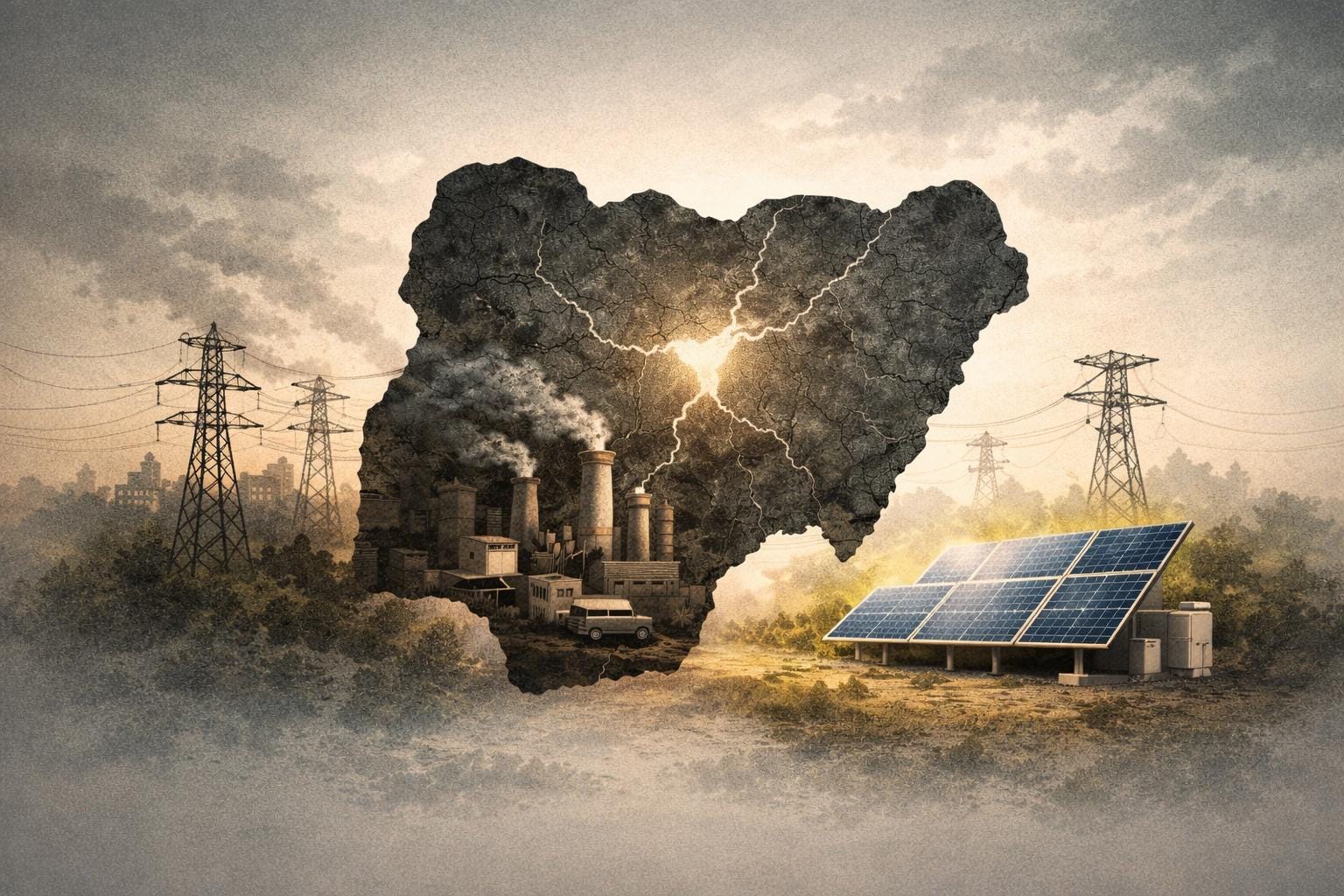
When power fails, it does not stay within the grid. It spills outward — into production lines, hospital wards, classrooms, data systems, logistics networks. It quietly rewrites the cost structure of the entire economy.
Factories price in diesel before they price in labour. Small businesses scale cautiously, not because demand is weak, but because power is unreliable. Even digital services — often framed as infrastructure-light — remain anchored to physical energy realities: servers, base stations, cooling systems.
Electricity is not one problem among many. It is the condition under which all other problems either improve or worsen.
This is where the tension sits.
Reform has focused on the electricity sector itself — generation capacity, distribution performance, tariff adjustments, and market liquidity. These are necessary. But they are not sufficient.
Because the real impact of electricity is system-wide.
A megawatt added to the grid is not just an energy statistic. It is a reduction in production costs, a shift in inflation dynamics, longer operating hours, and a signal to investors. It shapes how goods move, how services scale, and how cities function.
Yet policy often treats electricity as if its effects are contained within its own boundaries.
They are not.
This is why progress in the sector can coexist with stagnation in the economy. Installed capacity can rise while effective supply remains uneven. Tariffs can be adjusted while reliability remains uncertain. Reform can move forward on paper while lived experience remains largely unchanged.
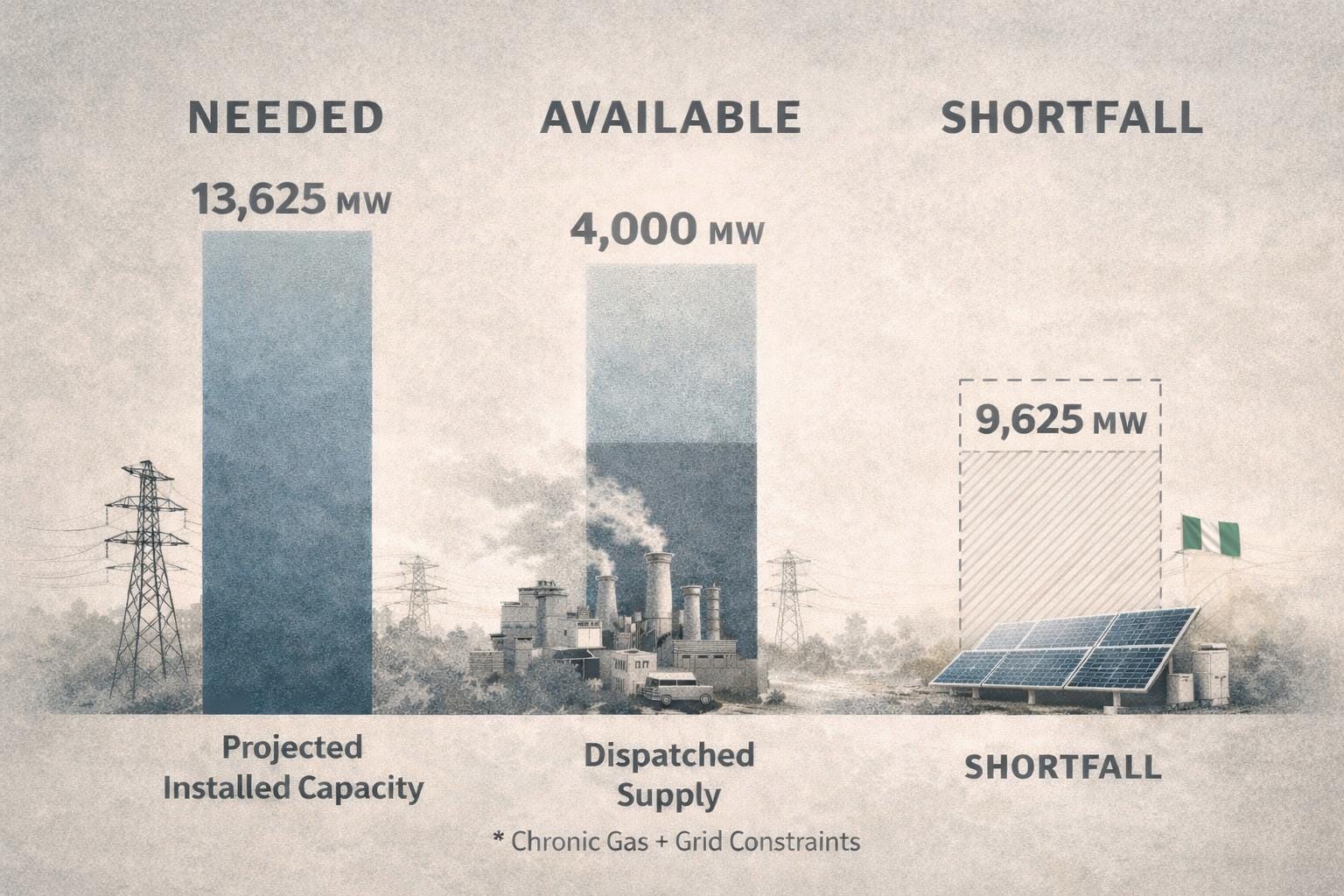
Recent signals reflect this contradiction. Available generation has improved and new investments have been announced, alongside efforts to resolve long-standing debts in the market. Yet actual dispatched supply often hovers around 4,000–4,900 MW — far below installed capacity of 13,625 MW — sharply constrained by chronic gas shortages (sometimes below 50% of requirements), transmission bottlenecks, and recurring grid collapses.
Capacity exists — but it is not consistently delivered.
The gap is not just technical. It is structural.
Electricity depends on gas supply, transmission infrastructure, payment discipline, regulatory credibility, and coordination across federal and state actors. Each of these is its own system, with its own constraints.
When one part moves faster than the others, the constraint simply shifts.
Gas shortages reduce thermal output. Transmission limits strand available power. Weak collections undermine liquidity. Tariff changes without trust deepen resistance.
The system adjusts — but does not resolve.
Electricity becomes something paradoxical: reformed, but not transformative.
In response, parts of the economy are beginning to route around the constraint.
In places like Kano, industrial players are deploying hybrid solutions — such as the recent 1 MWp solar-plus-battery system at the UMZA Rice and Oil Mill — to stabilize operations and reduce diesel dependence. These investments allow factories to extend operating hours, protect output, and manage costs more predictably. But they are not replacements for national infrastructure. They are workarounds.
They reduce exposure, but they also fragment the system — shifting reliability from a shared grid into isolated pockets of stability.
This is what adaptation looks like in a constrained system.
And it comes at a cost.
Because while the system adapts in fragments, accountability is still measured at the level of the whole.
During the 2023 campaign, Bola Ahmed Tinubu made a direct pledge:
“If I don’t give you constant electricity in four years, don’t vote for me for a second term.”
It was a clear framing of accountability. Not incremental progress, but constancy. Not sectoral reform, but lived experience.
The timeline matters. The promise is anchored to a full term — 2023 to 2027 — and ultimately to voter judgment.
But the deeper question is not whether reform is happening.
It is whether reform is translating.
Electricity is one of the few areas where perception and reality are tightly aligned. Businesses know their hours of supply. Households know their outage patterns. There is little abstraction.
The system is tested not by announcements, but by daily experience.
This is where the broader economic story returns.
Nigeria’s reform agenda is moving — on subsidies, exchange rates, and fiscal structure. But all of it rests on a critical assumption: that the underlying system can support the transition.
Electricity is central to that assumption.
Without stable power, cost reductions stall. Productivity gains slow. Informal workarounds — generators, fuel, redundancy systems — continue to absorb capital that could otherwise be deployed more productively.
The economy adapts, but at a higher cost — one that is often hidden, but deeply consequential.
Power, in this sense, is not just about light. It is about efficiency. It determines whether growth compounds or fragments.
And this is why electricity continues to shape everything.
Not because it is the most visible sector, but because it is the least avoidable constraint.
Until that constraint is meaningfully eased — through coordination, not just reform — progress elsewhere will continue to move through resistance: slower than expected, more expensive than planned, and less visible in everyday life.
Power, without power, remains the defining contradiction.
But the path forward is becoming clearer. Not a single reform, but alignment — across gas, grid, markets, and increasingly, decentralized solutions that complement rather than bypass the system.
Because electricity does not need to be perfect to be transformative.
It only needs to be reliable enough to unlock everything else.